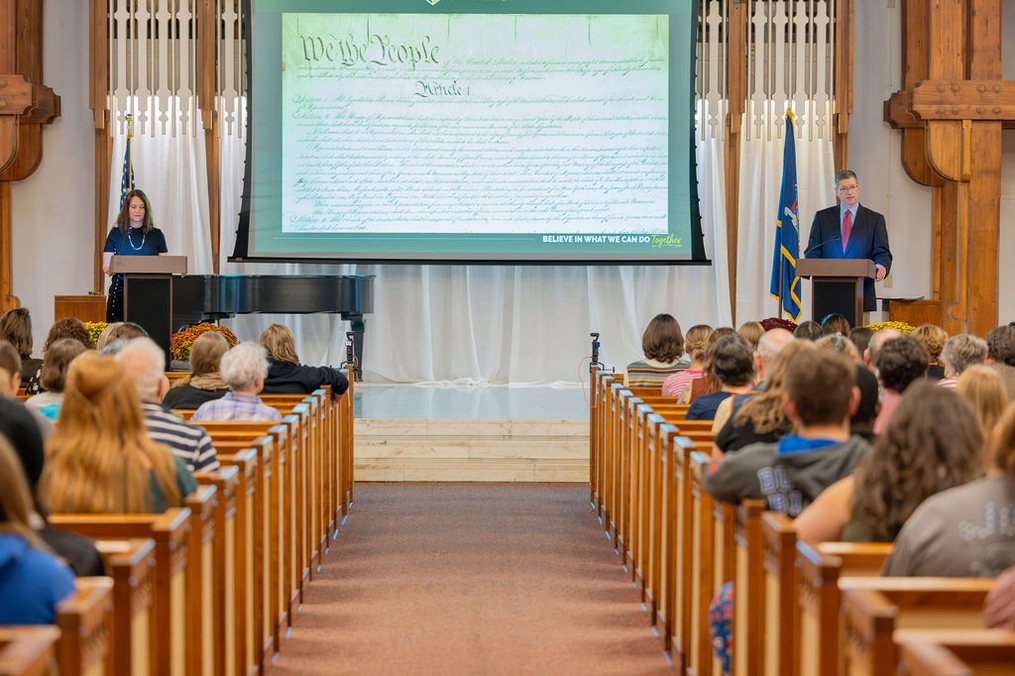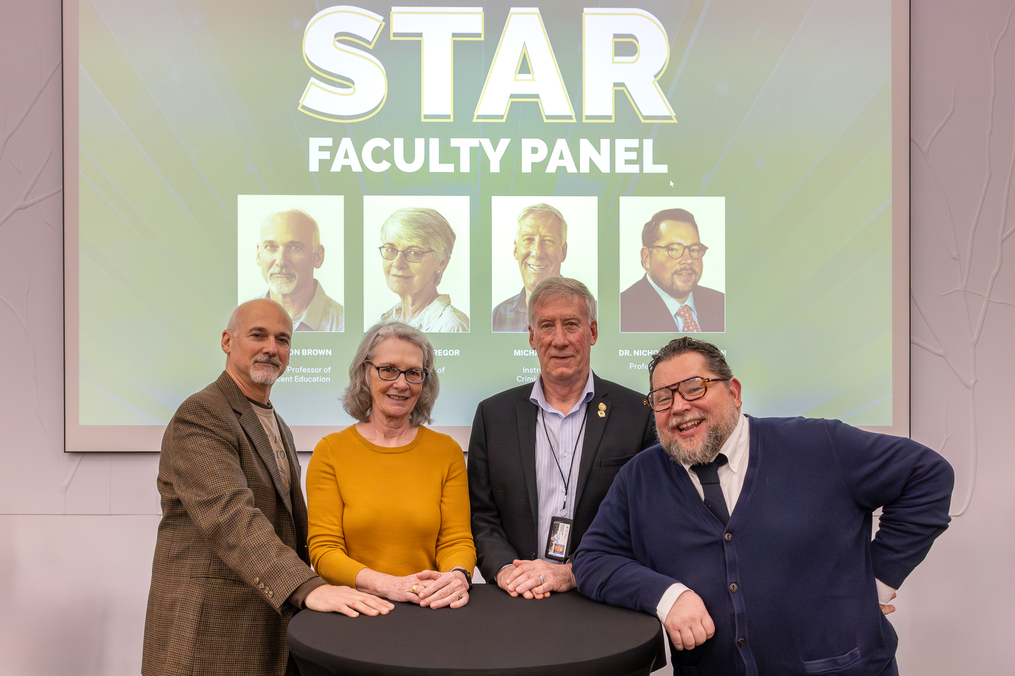
The sixth annual STAR Faculty Panel, held on Wednesday, March 11, brought together faculty representatives from four Keuka College divisions for a wide-ranging discussion centered on two connected themes: the shared human experience across disciplines and the role of a liberal arts-based education in creating meaningful student experiences and strong real-world outcomes.
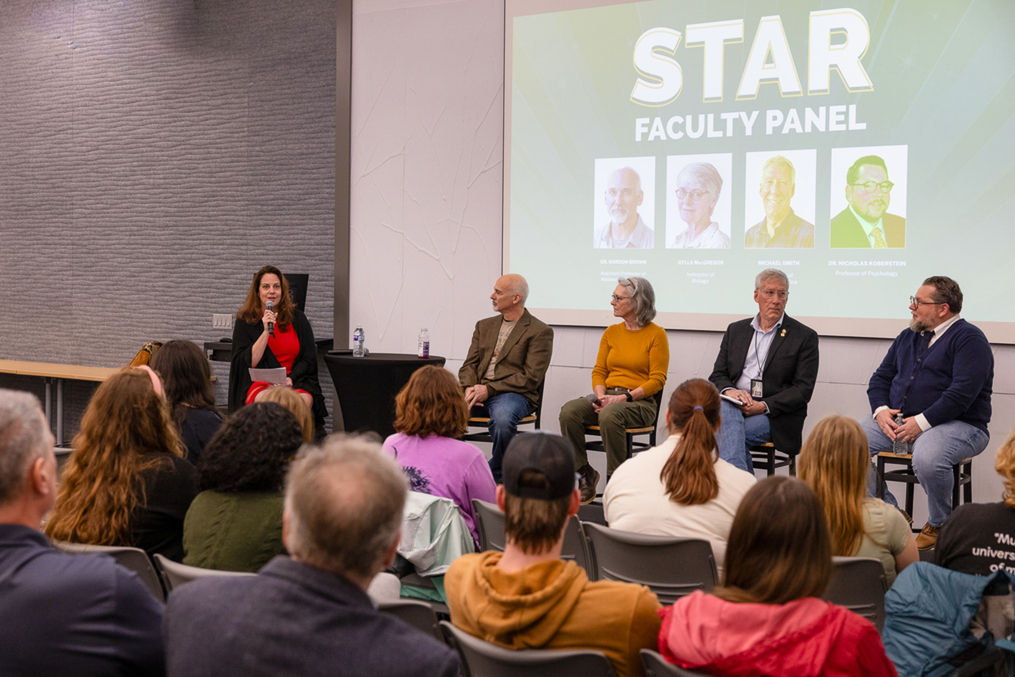
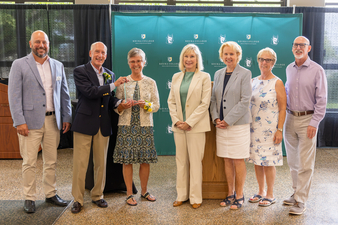
Keuka College Provost Dr. Heather Maldonado moderated the 2026 STAR Faculty Panel.
Moderated by Provost Dr. Heather Maldonado, the interactive conversation invited panelists Gylla MacGregor, Dr. Nicholas Koberstein, Michael Smith, and Dr. Gordon Brown to reflect on those ideas through both theoretical frameworks and their own personal and professional experiences.
The result was a series of distinctive yet deeply connected perspectives on how faculty members navigate shared challenges in teaching and learning across disciplines.
Here are four notable insights from the discussion:
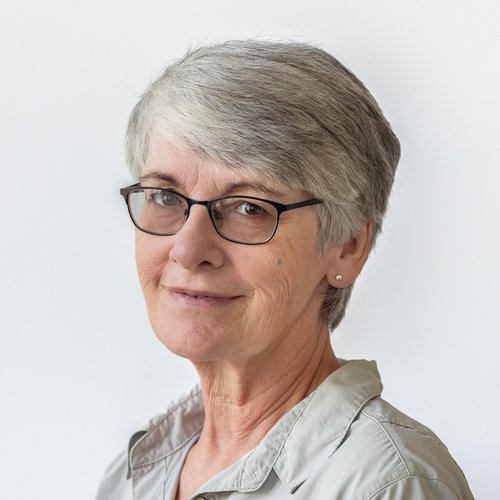
“A young rattlesnake faces enormous pressure to get their first meal.”
Gylla MacGregor has taught at Keuka College since 2017. With a background in biology, microbiology, ecology, and chemistry, plus professional experience with New Jersey Audubon, she brings broad expertise and a strong commitment to undergraduate research and mentoring.
Drawing on her own research, Prof. MacGregor used the behavior of young rattlesnakes to reframe the panel’s thinking about performance anxiety among college students. A rattlesnake is not born fully skilled. It learns through experience how to identify prey, respond under pressure, and survive within real constraints. In that sense, fear, uncertainty, and early missteps are not signs of incapacity, but part of the developmental process.

“We often conflate equity and balance. Balance is simply a return. But with equity, we can lift everyone up.”
Since joining the College in 2013, Dr. Nicholas Koberstein has been a leading advocate for first-year student success, with work centered on belonging, resilience, academic transition, and student development.
Dr. Koberstein’s point was that equity asks educators to do more than aim for sameness. Students do not begin from the same place, and they do not all need the same kinds of support to thrive. In higher education, belonging is often built through that recognition, when institutions respond with individualized teaching, feedback, tutoring, and encouragement, rather than treating every student identically.
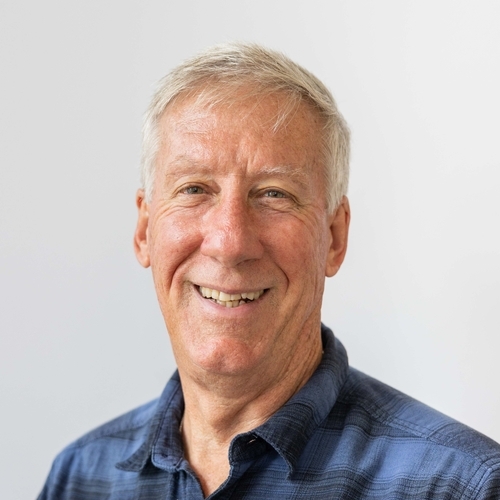
“Human behavior is dynamic and complex. A liberal arts education builds the critical thinking skills needed to analyze and respond to it.”
Michael Smith brings nearly five decades of military, law enforcement, and teaching experience to his work with students. A former U.S. Air Force security police officer and retired police chief, he has served in patrol, SWAT, training, and executive leadership roles.
Prof. Smith argued that a liberal arts education provides an essential foundation for students entering criminal justice, social work, and related fields because it prepares them for uncertainty, complexity, and human difference. From his perspective, that kind of education builds critical thinking, ethical judgment, and a more nuanced understanding of behavior than rigid models allow. Through exposure to ethics, multiple perspectives, fieldwork, and project-based learning, students connect classroom concepts to challenging real-world situations.
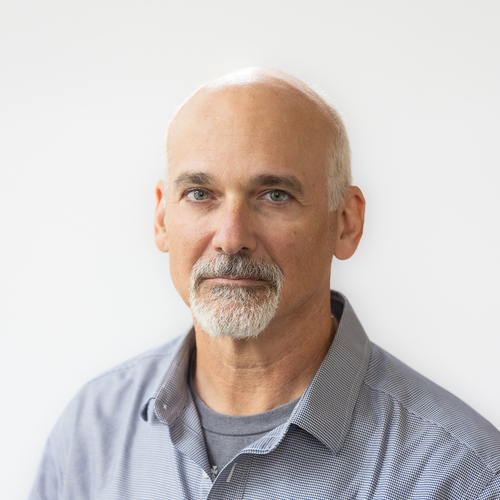
“The public education system is still young. We built it in the last couple hundred years, and we can build something new.”
Dr. Gordon P. Brown brings more than 20 years of K-12 and university teaching experience to his work. His background includes teacher education, multilingual learning, diversity and inclusion, curriculum development, and the International Baccalaureate.
Dr. Brown’s point was that many features of modern education are inherited structures rather than permanent truths. Practices such as strict age grouping, standardized subjects, classroom-based instruction, and high-stakes testing are often treated as inevitable, even though they are relatively recent developments and can reinforce anxiety and inequity. His remarks challenged listeners to see education as something that can be redesigned around curiosity, collaboration, community-based problem solving, and student passion.
“The themes and connections the panelists have drawn across their different disciplines highlight the interdisciplinary strength of a liberal arts education and show how our curriculum supports and deepens learning,” said Dr. Maldonado in summing up the session’s dialogue. “They also make clear that we have an exceptional faculty committed to supporting students in their work and in creating new knowledge for both our campus community and the wider world.”